

Scoliosis Assumptions
By Brock Easter
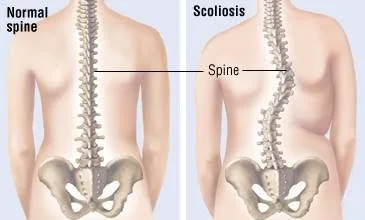
Scoliosis
Scoliosis and Motor Patterning.
In school we were taught to assume. Stretch muscles on the concave side of the scoliotic curve and strenghten the convex side.
What if the tight muscles on the concave side are weak? Should we be stretching a muscle with already reduced neural drive? What if the "locked long" muscles have an increased neural drive? Should we strengthen these further? Is it possible to find a combination like this? Of course it is. How about we forget the assumptions, and assess the patient without bias.
Yesterday a 17 year old elite 800m runner came in with bilateral ITB syndrome, painful calves, neck pain, and anteriorly rotated right shoulder. This was all blamed on a 22 degree thoracic scoliosis curve to the right.
Her right internal and external obliques were SO fired up that they were inhibiting her left core (QL, psoas, glute max). Since she would always run after school, after she had been sitting for hours on end, I also found bilateral iliacus with an increased neural drive turning down the neural drive to bilateral glute max. How this girl was running and competing at such a high level without an engaged glute max and a left core continues to blow my mind.
After releasing her right obliques and bilateral iliacus, everything came on line. Tension in the neck improved (didn't touch her neck), her shoulders game into line, and hips became level. No more ITB pain during gait.
I did not assess her spinal alignment. I assessed her motor capabilities. Her previous Chiropractor adjusted her spine 3 days per week for over a year and it never produced the results she felt after she was able to activate her left core and glutes.
LESSON: Don't make assumptions on the motor integrity of scoliosis patients based on the curve! Take it into consideration but don't let that bias dictate the treatment plan. Treat what you find! Not what you see